Showing posts with label compassion. Show all posts

Wednesday, February 13, 2013

Messing Up

Lately, I’ve been trying to encourage my kids to mess up. “Messing up is the best thing you can do, and making mistakes is the only way to learn,” I preached to Eden who cried after forgetting to do her homework. She threw me a deservedly suspicious look. My sermon was another example of the famous “Do as I say, not as I do.” “Be quiet, Ima,” the child said. Perhaps the wisest words heard that day.

How I wish to be always perfect, patient, polite, empathic, wise, thoughtful and kind. Never yell at the kids, never make a mistake, always treat other human beings with patience and respect. How I wish each of my actions and words came from the heart, out of love and compassion and trust.
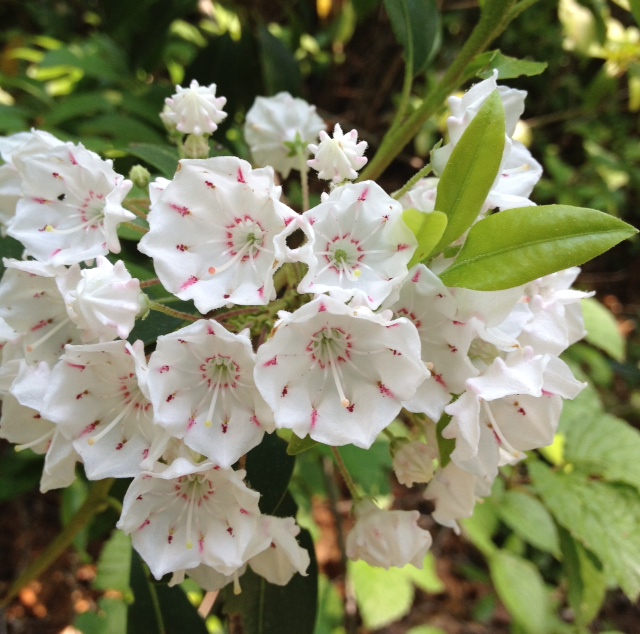
The perfect imperfection of nature
Why is it so much easier to be kinder to another person than to myself? I look at Eden’s forgetfulness of her homework and see it as a path to growth, a lucky break from which she can learn so much. But when I make a mistake, especially if it is about the kids or my writing, it is an earth-shattering disaster, a trauma unlikely ever to be healed, a case for putting more money in my savings jar for the psychiatrist, the horrible, terrible end.

In The Willpower Instinct, Dr. Kelly McGonigal writes about research that shows that people are less likely to repeat their mistakes if they are treated with compassion. Subjects of an experiment who were told not to worry about their candy consumption, because everyone sometimes eats too much, ate fewer pieces than their counterparts who were not given the reassuring message. It takes so little, it seems, to make us feel happier, loved and secure. It takes so little, just a few words, to make us remember to cling to our higher self’s dreams and goals.

But how to change habits of a lifetime? I am so used to dance to my inner Critic’s music that I can barely hear any tune other than his. Even trying to talk to the Critic seems to fail. A long list of grievances spews from his lips, and as I listen to him, I find myself questioning myself: Could he be right? Am I really like this?

“If I don’t push you, you will never do anything,” the Critic says. And it seems to me to be true. And yet I wonder: what if he could learn to push with compassion? What if instead of criticisms, he could provide gentle, empathic reminders? Seems to me my Critic and I have a lot in common. We both of us wish to be more patient and kind. Perhaps, if I could forgive him his messes, he could forgive me mine? Perhaps if we joined hands, something, finally, can be done?

To all of this joins another desire: to be an example to my children. To be able to say, “Do as I do.” I would love for them to grow up criticism-free. And perhaps, with that, as with everything else, I need to remember: don’t worry, everyone messes up. It's the best learning way.

Thursday, February 7, 2013

Hungry? Finish Your Cake

As a child, I was a very picky eater, and like a lot of children who leave most of their food on their plate, I too heard about the children starving in Africa. It made me feel quite bad. I imbibed the idea that my troubles were very small compared to those of other children who lived in less privileged parts of the world. I grew ashamed whenever I was struggling with a hard time. Suffering, indulging in suffering, was wrong, because what do I, a girl living in abundance, safety and freedom, have to complain about?

For years, I didn’t believe my own pain from depression. Divorce? Piece of cake. It’s not like I was starving. The flu? Other people are dying, untreated, of lesser illnesses even as we speak. I miss the kids? How dare I miss them when other children, even younger, are dead.

Some of my friends posted yesterday a link to a video in which people from third world countries read first world country problems: “I hate it when I forget my charger downstairs, when my house is so big I need two wireless routers, when my leather seats are not heated, when I leave the clothes in the washer so long they start to smell.” A blurb reminds us that “things that irritate us would be part of fantasy lives for people in third world countries.”

Listening to the video, I wondered, do its producers really believe that these are first world countries? Here in the United States, many are indeed fortunate. We have clean water, indoor heating, cars for every adult, public education, and abundant food. We also sometimes complain about forgetting our phone chargers downstairs. And we probably would, most of us, feel ashamed to mention any problems after listening to this video. But that doesn’t mean that our problems are any less difficult to bear.

Bipolar disorders, depression, divorces, suicide, illnesses, crime, car accidents, terrorism, losing a parent or a child, natural disasters, stress from work, we suffer from these and many more. And we could be allowed to suffer from our problems without being reminded that others in others countries are less fortunate than us. Would we tell someone whose wife died in a car accident that she was lucky to to even have a car?

I have an indoor sink!
I and many people around me (including those friends who posted that video) try to assist and give of our abundance almost every day to those in need, to those less fortunate than us, to those whose suffering is almost incomprehensible to us because we are looking at them from our position of privilege and plenty. Giving of our abundance is a wonderful feeling, to us and to those who receive of it. Let us not grow ashamed either of what we have or of what we lack, because it is our common pain and suffering that allows us to grow compassionate with the pain of the other.

Next time you leave your charger downstairs, go ahead and complain. My heart is with you. It is big enough to feel the annoyance (and sometimes much more than annoyance) of having to walk back down the stairs. My heart is big enough to feel for you and for the child with her stomach bloated with hunger. So fear not. As far as I am concerned, you’re free to feel pain.

If you want more:
Link to the First World Country Problems video

If this blog post is making your feel charitable today or any day:
Link to the Dian Fossey Gorilla Foundation, one of the charities I've been giving money to since Uri fell in love with gorillas at age 2.
Link to Bay Area Wilderness Training, a non-profit that is involved with getting less privileged kids outdoors. I believe that reconnecting to nature is our best path to world peace. I've been involved with this organization since 2006.

Saturday, December 10, 2011

The DUFF

I remember myself, in my first few months in the Israeli army, telling myself I was different from the other girls. My parents lived in California. I didn’t finished high school in Israel. I didn’t like the same music or movies as them. Once I told myself this story, I documented and verified it with every available clue, and finally it became the Truth. Looking back with a wisdom acquired over twenty years of feeling different, I know this was a story I told myself and not a truth. Perhaps back at nineteen it was easier for me to make myself different -- to reject myself before I risked rejection from the other girls.

I therefore tend to identify with characters who feel like they do not belong, such as Bianca, the protagonist in Kody Keplinger’s The DUFF. I enjoyed reading the novel with its romance, sex, conflict and high drama. But I think what most gripped me is that it made me think. I love it when a book does that!

For those of us who are clueless (like I was), DUFF is acronym for “Designated Ugly Fat Friend.” Bianca is told she is the Duff by Wesley, who she herself has pigeonholed as a male slut. Starting with these stereotypes, Keplinger then proceeds to shatter whatever beliefs Bianca holds about herself, her parents, her friends, and of course Wesley, because stereotypes, after all, rarely describe who we really are.

So is Bianca the Duff because she is not blond and has non-existent breasts? or is her friend Casey the Duff because she is as tall as a giraffe? or is her other friend Jessica the Duff because of her airy, flaky personality? And who decides who the Duff is, anyways? Wesley calls Bianca the Duff, but it is Bianca who identifies herself with the word and makes it her own cross to bear. Only toward the end of the novel, when she confesses the word to Jessica and Casey, does she discover that each of them believes it refers better to herself.

Bianca learns compassion in the novel, and most of all, she learns compassion for herself. She understands the common humanity she shares with everyone else: “I should be proud to be the Duff. Proud to have great friends who, in their mind, were my Duffs.”

I have to admit, at the beginning of the novel, before I got to know Jessica and Casey, I resented them. I liked Bianca, and I didn’t want her to be the Duff. I thought she was the Duff because they made her so, that they hang out with her because she made them look better. So I loved this twist! I loved how their friendship truly came from the heart, from the places where they each most felt vulnerable. I agree with Bianca when she accepts Wesley’s assertion that he is not the Duff, telling him flatly: “That’s because you don’t have friends.”